
Personal finance
The emergency fund, explained: how much, where to keep it, and when to use it
An emergency fund turns a crisis into an inconvenience. Here is how to size one, where to park it, and what actually counts as an emergency.
2 min read
RichBrainer explains personal finance, investing, and business in plain English, with the math shown. Read it, run the numbers, and make your next money decision with your eyes open.
01What we write about
Money touches everything, so we keep the scope tight. These are the beats we cover, and how they connect.
Budgets that survive real life, emergency funds, the order to pay off debt, and the quiet systems that stop money from leaking.
Index funds, fees, risk, and how compounding rewards the people who stay put long enough to let it work.
How companies actually make money, how to read a profit and loss statement, pricing, and starting something on the side.
Why smart people make expensive decisions, and the habits that make the sensible choice the easy one.
02The math, shown
Move the sliders. The forest part of each bar is money you put in. The peach part is what the money earned on its own.
03How we write
When we say something grows, you get the numbers behind it, so you can check our work.
Pay down the loan or invest the difference? Every option costs something, and we say what.
No stock picks, no get-rich-quick plans. Just the ideas that still hold up in ten years.
04From the blog
Personal finance
An emergency fund turns a crisis into an inconvenience. Here is how to size one, where to park it, and what actually counts as an emergency.
2 min read

Investing
Low costs and broad diversification make index funds hard to beat over decades. Here is the math behind that, and the situations where they fall short.
2 min read
Business
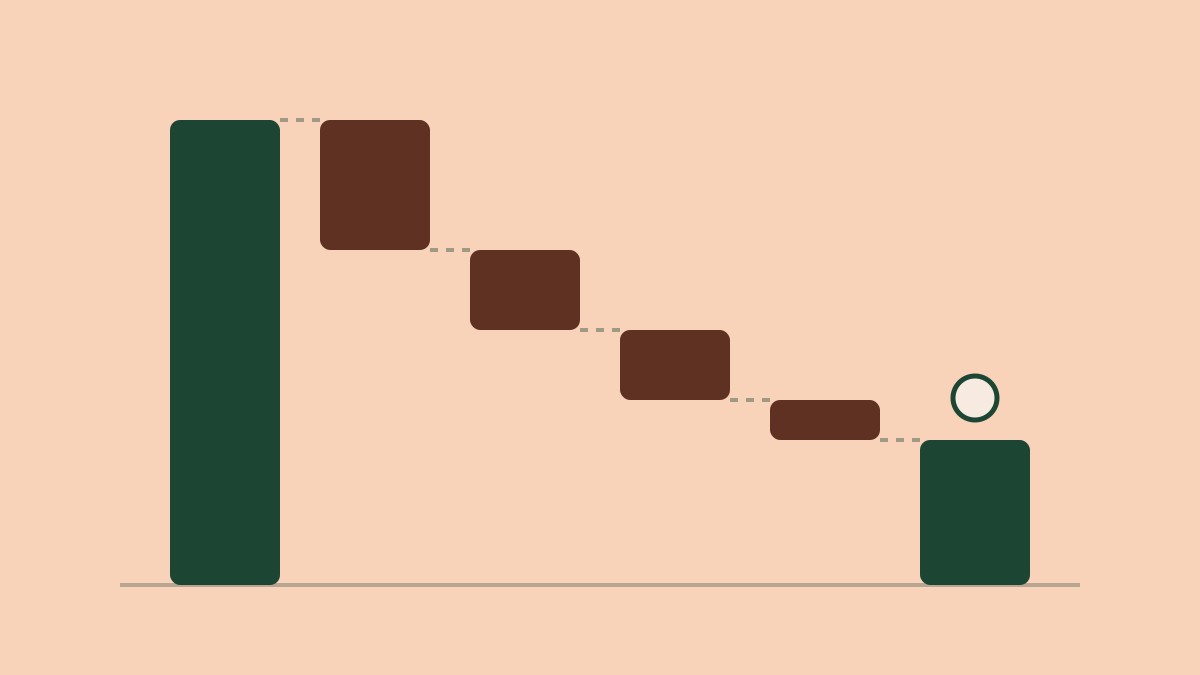
A profit and loss statement tells you whether a business is working. Walk through it line by line, from revenue down to net profit.
2 min read